Showing posts with label inspiration. Show all posts

Sunday, August 22, 2010

Tap Into Your Infinite Interconnectedness with Liz Filios


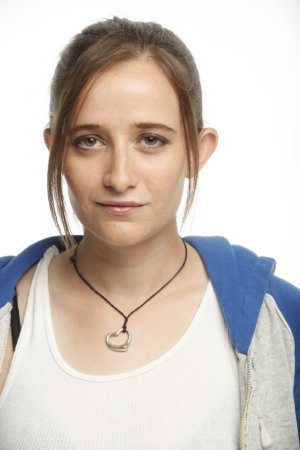
Meet my friend Liz Filios. Liz Filios has worked in India, South Africa, and Italy, but now calls Philadelphia home. Liz was seen recently in The Arden Theatre’s productions of Sunday in the Park With George, and Candide as Cunegonde. Critics called her performance “dazzling,” “a phenomenon” and touted the newcomer’s talents – which include “a gleaming high soprano voice, and a sense of humor.” Liz has also performed for Philadelphia audiences at The Wilma Theater (Eurydice, The Life of Galileo), The New Candlelight Theater (Lend Me a Tenor, Hello Dolly! ), and The Walnut Street Theatre (Les Miserables). She holds a B.F.A. in Musical Theatre from the University of Michigan and has performed as a vocalist with The Philadelphia Orchestra, the International Opera Theater and the Cape Town Opera Company. She is currently nominated for both a Perry Award and a Barrymore Award.

Liz and I met at La Citadelle in Philadelphia to catch up with each other and conduct the interview before she headed off to India for a friend's wedding. It had been so long since we had seen each other that I found we were discussing issues I wanted to address before I'd even had a chance to open my notebook or turn on my recorder.

ME: OK, I'm ready now. You were talking about being cracked wide open - the deconstruction that occurs before construction.

LIZ: Yes, well, sometimes you choose consciously to make sacrifices for your art and then other times you don't have any choice. You can try to make sense of it in retrospect. You can say to yourself, "Well, this wouldn't have been possible had I not lost this or given up that." That can be of some comfort but there is an arbitrariness to it all that is inherent, especially if you're in the arts, and you have to just learn how to enjoy the ride. Otherwise it can drive you nuts.

As I get older, I've been trying to look at all of this with new eyes. Yes, I might be making this many dollars but what is my quality of life? You don't just get paid in fiscal currency, you get paid in artistic currency as well.

Of course, in order to do this you do often have to break things down in order to build them back up again. Destruction is a necessary part of creation and you can take pleasure in knocking down the blocks. Learn to not get too attached to one temporary thing but appreciate its transience. That makes it easier to let go and easier to start again.

ME: I know actors often find themselves between jobs. What do you do to stay inspired when you're not technically employed.

LIZ: Oh my gosh!! I am a workaholic! I will find something to do!! I can't sit still. I would just go crazy. There are classes to take, there's a turn-out to work on, there's a high note that needs refining, there's an acting technique to explore, there's a teacher out there from whom I can learn. To me, it's getting back to the real part of my career, the honing of the craft and working on the weaknesses. Getting the job is the fun part. The real works comes when you're free to study. In Philly, I've taken classes with Antonio Fava, in commedia dell'arte, I've taken classes with the Philadelphia School of Circus Arts. I tend toward the physical classes because I think one of my main faults is that when I get into a show I get so buried in the material and the text that I become disconnected from my body. I get so much in my head that I start to censor myself. I find that taking classes that reconnect me with my body helps to generate new ideas. For instance, I took a class with Steve Pacek when I was between shows in February and March of this year. I knew Steve because I'd seen his work and he is brilliant! I love watching performers and not necessarily dissecting their work but asking myself what it is that makes them great. So, when I heard Steve was teaching a class, I said, "I'm there." It turned out his class was full but I wrote to him anyway. I said, "I've seen you in this and this and these are the reasons why this class is really important to me." That got me in. We did a lot of work on Viewpoints and Laban. Steve would have us perform our songs, choose two Laban "effort shapes" and try to do the movements without focusing on anything but the movement. Suddenly, things would just pop out of me. When I think about vocal pedagogy I am stuck in academia, but when I think about "slashing" suddenly this incredible high note will soar out with out having to "pass GO and collect $200," if you know what I mean. It was really crucial work for me and I wouldn't have been able to do it if I'd been in a show.

Now, some shows kick you in the butt and force you to learn. When I was cast as the Narrator in Joseph And The Amazing Technicolor Dreamcoat I said, "I can't do this. I can't sing this." I was more scared of it than I was of Cunegonde because it was belting. Musical Theatre can be very dogmatic, things must be done the way they were done before. If you do A Chorus Line, you'd better do the original choreography! The role of Narrator is one of those things. I'd just come back from working on the cruise ship and had all this money saved up. I blew it all on about ten different teachers trying to figure out the secret to belting. At the end of this journey I was working with one teacher having finally mastered my belting technique and I was singing away. She said, "Now can you do that in your head voice?" I said, "Why would I want to do THAT??" She said, "Just try it for me." So I did and then she said, "WHY would you ever want to do anything else?" So, after all those hundreds of dollars and voice lessons, the most valuable thing I learned was - I can just be me.

(The Narrator, by the way, is the role for which she received her Barrymore nomination)

ME: Speaking of teaching, I know you've been doing some of that yourself.

LIZ: Yes, teaching is another thing about which I’ve become very passionate. At the same time I was taking Steve Pacek’s class, I was working for Maureen Mullin at the Arden doing an outreach program called Arden for All which correlates to their children‘s programming. They train theatre artists and send them out to public schools. We teach the text and a little bit about the play and they get to see the play for free. The idea is play, have fun and learn about the play but really you’re teaching them grammar and the basic building blocks of story and writing. It was great to get those nuts and bolts in but sometimes the lessons were so oriented toward meeting the requirements it sucked the fun out of it. So, I tweaked the lessons a bit. Then a month later someone from the Montgomery Theatre called and said they had a pilot program and needed a couple of teaching artists who could come help them build it from the ground up. So, Maureen said, “Well, I have this one person who was really ballsy and changed my lessons plans, maybe she thinks she knows what she’s doing.” So, they brought me on for this project and it was huge! I partnered with four teachers from High Schools in Souderton. Two of them were English teachers, one of them was a Chemistry teacher and one of them was a Trigonometry teacher. We brought theatre into the classroom and made learning fun. I enjoyed it as much as performing because I got to use other parts of my brain.

ME: That sounds so interesting. Can you tell me a little about one of the programs you did. How about the English class?

LIZ: They were studying The Great Gatsby and we created this one idea that was based on Facebook because social networking is such an important part of the story and the kids have this framework built in ready to access. They understand what social networking is now in a way that when I was studying The Great Gatsby we never would have been able to fathom. Facebook was blocked for the school but we used a similar program that allowed us to create profiles for the characters in the book. They were then able to make “friends” and send private messages and public messages to each other. So, the students got to see the whole social interaction and the intricacies of how the characters related to each other. Even the kids who initially treated it as a joke were in character!! It was awesome!!

We also did a section on jazz. F. Scott Fitzgerald called himself a writer of the jazz age. So, I brought in a bunch of jazz recordings. I also introduced the students to several musical terms such as scat, syncopation, and chromaticism and helped them make their own links to the literary parallels.

I found it all just as inspiring as working on a character on play, maybe even more so because of the ripple effect. I also have such respect for teachers who do this year round. I enjoy being the breath of fresh air that can come into the classroom.

ME: Do you have any other creative outlets? I mean besides teaching, acting, singing, dancing and trapeze work?

LIZ: Yes, I kind of discovered it by accident. I started writing music last year while I was working on a cruise ship. The discrepancies between my living conditions as a performer and those of the other staff angered me. After weeks of seeing the injustices toward them I got so mad I had to write something. I didn’t sit down one day and think, “Now I’m going to be a composer.” It was more like working out my frustration on the piano. Some people punch pillows, I pounded on the piano keys. Then, words surfaced and suddenly there was a song. It may not be a great song but it was an outlet. I found that after I’d plugged into this I could express other things. Then I started playing my songs for people and I would see their reactions. It was such a simple yet profound experience to be able to sing about my heartbreak and then suddenly theirs would come to the surface and they would tell me how they thought the song was about their family or their loved one. I kept writing because I wanted to help other people. I didn’t want to make money or even make a recording or have my songs published . I just wanted that experience of being able to sit down in a little room at a piano with a few of your friends and say something you don’t have to courage to say outright. You can say it in a song and it’s OK and they can listen to the song and cry and it’s OK.

It’s so cheesy but I was reading Eat Pray Love on the ship and there’s this part that talks about how some of the major religions of the world explain human suffering. The way that Elizabeth Gilbert explained it was, Christians believe human suffering comes from original sin. Buddhists believe it comes from desire and if you can let go of your desire you won’t suffer - as much. Then there are the Hindus who believe (I just love this) it’s just a case of mistaken identity. We suffer because we believe we are individuals and we think we are these lonely, isolated organisms that are totally alone in the universe and that our suffering is our own private burden. Whereas, if we knew that we aren’t alone, that we are a part of this huge fabric of infinite interconnectedness then our suffering wouldn’t be so great. We would realize that everyone has the same experiences. When I play my songs for other people I can see that web, I can see my connection to every other person in that room so clearly.

ME: Do you feel any difference between using your words as opposed to singing words someone else has written?

LIZ: Yes, but I sort of cross the wires. I find it can be a really successful mad scientist experiment when I’m singing someone else’s words to try to make them my own. Whereas when I’m writing my own material instead of making it about me, me, me, sometimes it’s easier to zoom out and write about something I know nothing about. It’s like throwing out a larger net, then you reel it in and say, “Ok, this works, this works and this I obviously know nothing about.”
ME: I’m also wondering about the two mediums from a very raw, creative output standpoint. In theatre we have many other people’s input, the director tells you this, the choreographer tells you this, the vocal director tells you that whereas when you write a song it’s much more direct.

LIZ: There is a joy in my personal creative projects but there's also an aspect that’s truly terrifying because it’s just you and it’s your fault either way. I’m coming back to Elizabeth Gilbert. Have you heard her Ted Talk about Creativity?

ME: Yes (you can find it here)

LIZ: She says that genius was considered to be this separate entity that comes to you and inspiration comes through that. So, if it was good you couldn’t take all the credit necessarily and likewise if it was bad you did have to take all the blame. I think when I’m creating something, the most important thing for me is patience. I want it to be right the first time but it doesn’t have to be and that’s why it’s called the creative process. It’s frustrating but that’s also the beauty of it. When things are born in nature normally they don’t happen over night. Sometimes it takes days, or weeks, or months or even years.

There’s story of the acorn and the oak tree and how the acorn has this force pushing it up out of the ground. But, there’s also there’s another invisible force which is the actual oak tree itself projected in the future that is pulling it up and saying , “Come on, you can get there, you can reach it.” I think that works for artists as well. You can say, “OK, I’m only this far off the ground at the moment but it’s exciting to know that there’s still space to grow.” If I hit the ceiling every single time I sat down to create something, I’d be bored. It can be hard because it entails a lot of failure along the way.

I have friend who is a director in town and she said, “Why do we do it? It’s embarrassing. Why do we choose to do something in life where we constantly fail?” We try and try and maybe one of these projects that we try over all of these years might succeed.

ME: (laughing) and it’s all public and they write about it in newspapers…

LIZ: I know and we do it over and over!! I guess we’re oblivious to that. We don’t care how many times we fail. We keep trying and you have to treat success and failure as

TOGETHER: impostors. (we’re remembering an earlier point in the conversation when Liz mentioned that her Dad introduced her to Rudyard Kipling’s poem, IF and how it has been some of the best advice she’s received.)

LIZ: It’s not about quantifying it. It might be kind of impossible to take the pressure off of yourself when you first sit down to the blank canvas to say, “It doesn’t matter if I succeed or fail because they’re both illusions and it doesn’t matter if I finish it today or twenty years from now," because we do carry all of these social pressures with us when we sit down to create. But, I know when I’m most connected to my inner child I’m not thinking about judgement, I’m just expressing myself. So, maybe that’s selfish but it’s important to be selfish sometimes.

ME: Well, perhaps the initial impulse may be to just to get the thing out on to the piece of paper but then comes the part where you share it and I think that goes back to what you were saying earlier about being interconnected and that’s why we share our stories.

LIZ: and that’s selfless because there’s that gap you have to bridge and the choices you have to make to share and that takes a lot of courage. So, it’s no longer about you.

ME: Since we're talking about courage, how do you approach auditions? So many of my students find them terrifying. How do you frame them for yourself?

LIZ: I try not to want it too badly. I tend to sabotage myself the more I think, "I need this job" or "I would be perfect for this role" or "I hope this person doesn't show up for this." Those kind of thoughts are completely useless and I've left most of them behind. If I find myself wanting a part I will try to tell somebody else about it. It's sort of like audition karma! If I tell my friends who are also my competition, it takes the pressure off of me and I can't want it as badly now. So, spread the love! And remember that the real audition happens after you get the job. You don't get jobs from auditioning as much as you get jobs from jobs. If you're lucky enough to get a good gig just do your job and be on your best behavior and pour yourself into it - all your energy, all your eagerness, all your creativity and that will get you ten times more jobs than one audition will. So, when you audition just use the talents you've been given in the best way you can. Share. Go in and say "here" and a little bit of that invisible fabric will appear if you do your job right - and that's all you wanted in the first place.

Monday, August 2, 2010

Friendship, Creativity, Dedication, No Excuses and No Fear

Marja-Lewis Ryan


One beautiful summer evening last month, Bruce and I went into Philly to see a new film
The Four-Faced Liar. It was the first foray in to film of a young woman we’d watched grow up at the theatre. We‘d heard great things about the film and we were off to lend our support. By the film’s end we were both speechless. I don’t know what impressed me more, the film or the young woman who was the writer/producer/actress of the film. The Four-Faced Liar premiered at The 2010 Slamdance Film festival and has been on the circuit since picking up award after award and playing to sold out audiences. Wolfe Releasing, MTV/LOGO and Multivisionaire have respectively bought domestic DVD/VOD, broadcast and foreign rights. It is smart, funny, fresh, and honest - a staggering slam dunk entrance into the film community. After I’d picked my jaw and my heart up from the floor I gave writer/producer/actor, Marja-Lewis Ryan a call to ask her a few questions. I think you will be impressed and amazed by her and her no-excuses, no-fear attitude.

ME: OK, I know you’ve told this story hundreds of times now but will you tell it one more time, how did this film come to be?

MLR: (laughter then a deep breath) Well, Daniel Carlisle, Todd Kubrak, Emily Peck and I all went to NYU together. We studied at the Atlantic Theatre Company which was founded by the playwright, David Mamet and actor William H. Macy. During our second year they came to the school to hold a master class and I was among six students chosen to perform three scenes in front of them. At the Q&A after the master class a girl stood up and asked Mamet, “Why don’t you write more roles for women?” and he said, “Why don’t you?” He kind of just dismissed her like that and I was laughing to myself but then I thought, “It’s true, why don’t I?” So, I did.

We had scene studies for class and the kiss of death was to get a scene for two women because there’s so little material out there, so I wrote a one act play for two female characters. I produced it for one night in New York. People came and liked it so when the four of us moved to LA together I re-wrote it into a full length play for the four of us. We produced it together in the spring of 2007. Then I took that play and went off to a farm in Kansas for three months and I changed it into a screenplay. When I returned to LA it took about nine months to workshop the script and raise the money. We started shooting in the Fall of 2008. We shot 28 days over nine months - two chunks in New York to get the seasons, one in the Fall and one in the Winter and then 17 days in a sound studio just north of LA. After that it took about another six months to get through post and then we premiered at Slamdance in June of this year.

How’d I do?

ME: In every respect - amazing!! You were all in NYU’s theater program. What prompted four theatre kids to change the play into a screenplay?

MLR: We were four young kids, 21 & 22 years old, in LA. One of us had found representation but the others of us weren’t having any luck at all. One thing we took away from school was to create your own work. The one way to make sure you’re working is to do it yourself. So, I wrote the full length version of the play and we all collaborated together to workshop it. We did the play just to work but I think we were all a little surprised that people liked it so much. I mean, we all thought we were funny but we didn’t know if other people would. They did and that positive response helped spark us to take the script further.

ME: Had you ever written before?

MLR: No. The one act with the two female characters was the first thing I’d ever written and I kept exploring that original concept, re-working it into the full length play and then into the screenplay. Before then I’d never thought about writing but it felt natural and easy to me at the time so I’ve continued to write ever since then.

ME: I was struck by the honesty of the screenplay. There were a couple of times, in fact, when it was startlingly honest and I thought, “Yes, that’s what the character would really say.” Can you tell me a little bit about your process and how you get inside a character as a writer?

MLR: Something I’ve always done is kept a journal, not a “Dear Diary” type of journal but when people say things that really strike me I write them down. I also have a very, very strong auditory memory. I can remember things that were said years ago verbatim. So, I draw on that when I’m writing.

I also did some character study. The one element of the story that was hard for all four of us to get behind was the cheating. We are all pretty vanilla when it comes to that. We’ve none of us cheated or been cheated on. So, I talked to someone I know who’s about 20 years old than I am and who was like that when he was a kid. He answered my questions honestly and offered some insight into what it’s like to love someone and to be compelled to test them in that way.

ME: I know the play/screenplay was workshopped. Did things emerge from that experience that proved helpful?

MLR: OH!!! SO much!! After I had written the screenplay we would meet at 10:00am one Sunday of every month for “Defend Your Character Day.” Basically everyone wrote in longhand what happened moment to moment in their character’s journey. That way we’d be sure, well, first of all that everyone had a journey and we could clearly see the places where from point A to point B didn’t quite make sense.

I don’t know how anyone writes without workshopping because - everything sounds good in your head (laughing). And eventually, all four of us became useless because we’d been through so many drafts we’d be carrying over information that wasn’t even there anymore. So, it was really helpful to have an audience that could say, “Why did he do that?” Then we could see where we needed to fill in the holes.

Toward the end of the process one of my professors sat down with me and we went through the script from a structural perspective. One thing he told me that really stuck with me was that if your actor’s not saying it right - it’s your fault. I’m working with three very good actors so I have to assume that it’s not them - it’s me. To take that kind of responsibility for every single line really opens things up for me because I realize I have the power to change each moment
.

ME: How did being the producer of the film effect you as a writer?

MLR: Well, the main thing was I was acutely aware of how much money we had. I became hyper aware of how much it was going to cost to really shoot this thing - down to the day. So, for every scene I wanted to write I had to make sure that it took place in one of the locations we already had slated. It was limiting in that way but it also kept me focused. It forced me to focus on character development. Of course, I couldn’t introduce any other characters and it became a challenge to make these people look really cool and popular when we didn’t see them hanging out with anyone else!

ME: I find your character, Brigit, to be one of the most interesting characters I’ve seen in literature or film in quite a while. I know you were writing a strong female character for yourself to play but were there any specific traits/characteristics you wanted to highlight or did she just emerge organically?

MLR: One of the things I felt very strongly about was the time line of the screenplay. I wanted to write a journey that someone who was 20-21 could really go through. I wanted her walls to be broken down a bit but I didn’t want her to complete the full journey of human life in the course of 90 minutes. Life doesn’t work that way. Change takes time.

I also wanted her to be smart. I wanted her to be more than just a one dimensional character. I didn’t want people to see her as just a player, whose only thought was picking up women. I wanted them to see that there was more to her.

ME: Ok, you had never written anything before and you had never done film before. HOW did you make this happen?

MLR: (laughing) THAT’S a broad question! The four of us really wanted this. Between technology and meeting people we were able to look at over 500 reels just to find someone who we thought would be a match for our film. We invited 5 out of the 500 to our final staged reading. Later we had a meeting with Jacob, the guy who wound up being our director, and he got it, he got our humor, everything - he just got it. We were lucky we found what we wanted - someone we could connect with. And his best friend was our cinematographer and his best friend was our DP. So, we found our team at the opposite end of the camera. The four of us found the four of them and we became like a little family - and we all pulled a lot of weight.

ME: I have to think that you must have come up against several things you’d never done before. Were any of them scary to you and how did you push past the fear?

MLR: I think the scariest part was asking for the money because it’s a crap shoot. I couldn’t guarantee they would get their money back. So, to ask people for hundreds of thousands of dollars was definitely the scariest thing I had to do. But, the first “yes” erases all the “nos” you heard before it. It’s an incredible rush, an incredible high. Even a small amount of encouragement can spark you on. So, after the first “yes” it became much easier.

ME: Sitting in the audience and watching your work with the audience had to be a new experience for you, too.

MLR: We did post right up until the second we left for Park City so none of us had seen the final mix until we were watching it with the audience at Slamdance. It was a little unnerving. We all sat in the back and held onto each other. I still get nervous every time I go to a screening. I guess it’s the lack of control. In the theatre you can feel the audience and adjust accordingly - you and the audience go on the journey together. So, the screenings can be a little scary. Besides, by now I know the film inside and out so I usually don’t watch anymore.

ME: You and the other actors, were also the producers. That had to have had it’s challenges. Did this experience inform how you might approach future projects?

MLR: DEFINITELY! For sure!! We tell this next story as sort of a joke now but - it was real. One day we shot for twelve hours, then I had to go back to the hotel room and sit up with the director to re-write the scenes we were going to shoot the next day. So, I was up for six more hours. I had to be in make-up at 6:00am so I got about 4 hours of sleep. I showed up that next morning and the make-up artist took one look at me and said, “Thank God I have white eyeliner, you look like hell!” It sounds funny but it was really a problem. We all always looked and were exhausted. We’d be up past midnight solving problems and then would have to be on set at 4:00am. We had bags under our eyes and we all lost a ton of weight.

I also have to say that to be aware as we are shooting that we are falling behind schedule does not relax me. I can’t separate the producer who knows that and is stressed about it from the actor who needs to relax in order to do her job. AND, the people I would normally turn to - my best friends - were all in the same boat!!

SO, in the future we won’t do that. For instance, we’re shooting a short in NYC in a couple of weeks. I wrote it and I’m in it but I am not producing it. Todd will be producing it.

Now, that all being said, I do have to add that there was a positive side to it. The first day we were on the sound stage together, Todd and I were helping the art department paint our set. All the grips and gaffers and swings were hanging lights and saw us there. Then the next day the camera was on me. That created a kind of morale because we all felt so completely responsible, well, because we were. People were inspired across the board. Everyone busted their butts and pitched in in so many ways. Everyone had the feeling of - whatever you can do, you will do.

ME: This has been an amazing ride for you. What would you say was the most amazing thing that’s happened to you related to this experience? What did you walk away from and say, “Wow, I can’t believe that happened?”

MLR: I actually have a very specific answer to that. The last scene of the film is a really long, one take crane shot. It starts about 25 feet up in the air then comes down on me and the other female lead, Emily, and that’s how the film ends. Film in general requires that everyone be spot on in order to get the shot but with a shot like this it really is “all hands on deck.” You have Emily and me who can’t screw up, the art department that has to arrange the entire room to make it look just so, you have the crane operator who can’t jerk or move anything, you have Danny who’s operating the camera above it, and you have Jacob, our director, who’s calling all the shots. And then, you have the entire crew that’s behind the monitor that can’t move or make a peep. Oh, and then there’s the money we had to raise to get the crane for the day so there’s THAT guy…! So, it was the 1st of July. I know that because it was Jacob’s 22nd birthday. It was about the fifth take. We said our final lines and Jacob called “cut.” We could hear sniffling so I popped my head up from the bed and then went over to him. I crouched down next to him and he said, “Do you guys want to go again?” Emily and I looked at each other and said, “no” and he said, “good.” The we walked outside together and we just cried. We really felt like we had made something that day. We felt like we did it. I don’t know why, but it felt like a real movie that day.

And then we had to shoot for another nine days…!


And that, I think, tells you more than anything about who Marja Lewis Ryan is. “What’s the most amazing thing that’s happened to you” is a cheesy question and the typical answer would be “We met So&So at Slamdance.“ But, Marja is the sort of woman for whom the craft, the work, the art is the payoff. She is the sort of woman who can recognize and celebrate a special moment in the midst of the stress and pressure and knowing that there is still more work ahead. She’s also the sort of woman who when asked if she has anything to add will say, “We were a team. We did it together. Let me just say everyone’s name.”

Jacob Chase
Emily Peck
Todd Kubrak
Daniel Carlisle
Liz Osborn
Danny Grunes

Samantha Housman


Sunday, July 25, 2010

The Ripple Effect of Jenny P


Meet my friend, Jennifer Pilong - singer/songwriter, actress/playwright. When I decided to venture into this interview experiment Jenny was the first person who came to mind. In fact, the person and the idea basically came together. Now, I know MANY talented and creative people but Jenny seems to be dedicated to the creative process itself. As she says, "I have a real fifth chakra thing going on!" She has her hands deeply in so many mediums I was curious to know how she balances it all.

I first met Jenny in her incarnation as an actress. She is a card carrying Equity member who has been performing professionally since she was 17 years old and whose theatre credits are too numerous to mention here. Just believe me when I tell you she's a powerful and organic performer.

On the other side of the stage Jenny has musically directed some theme park shows, written a Christmas show which was performed at the Scottish Rite Theatre in Collingswood, NJ and Snug Harbor, NY. She also co-wrote the musical Fruitflies which was part of the Philly Fringe Festival and PGLTF. Most recently she wrote Ripples, a beautiful play about how the ripples we create can make a huge difference. Ripples had a reading at the Walnut Street Theatre this spring and after a few revisions, Jenny is now in the process of submitting it to other theatres and festivals.

Jenny-the-singer is also very busy. Jenny and her song writing partner, Stephen Kocher, make up the singer/songwriter duo, Jenny & Me. They are, as she says, "two happy kids with a penchant for sad songs." She also lends her powerful voice to Hotsy Totsy, "a three gal band that sings killer three part harmony in a style reminiscent of the Andrew Sisters."

As if all that isn't enough, Jenny also designs jewelry, paints, is a "bonafide fancer (that's a fake dancer)" and has recently started the lovely blog, Tiny Stone Big Ripples.

Jenny and I met for coffee last week and had a wonderful conversation. Here's some of what we covered :

Me: Jenny, you are involved in so many creative endeavors. Is there one that you consider your main discipline or are they all equal in your mind?

JP: I think they're starting to become equal. In the beginning, it was singing that I felt most comfortable with but then I got to AMDA (the American Musical and Dramatic Academy) and I realized that it doesn't matter if there's nothing behind the voice. One of my teachers said, "It's nice but it's vanilla pudding." At first I thought, "What do you mean, I just hit a high b-flat!!!" But after my initial impulse I immediately got it. I started putting the intention into my singing and that led naturally to the acting.

I've also always written but never with any discipline or intention until I became an adult.

Me: That leads me to another one of my questions. Did any of your talents come as a surprise to you?

JP: No. I was always drawn to anything creative. If we would have had more fat cabbage when I was growing up I would have taken any kind of dance class, painting class, ANY kind of artistic class I could get my hands on.

Me: Do you ever feel that because you are involved in so many different areas that one suffers while you concentrate on another.

JP: I used to. I always used to say, "If I'd just focus on one of them I could probably be really successful at it." And so, I had to make some decisions. I closed my on-line jewelry shop and sold off my inventory because I decided that the jewelry was just going to be for fun and just for me. I had to decide what I really wanted to make a living doing and I really want to make a living with something like Ripples. I want to write plays that make an impact and be an actress/singer. The acting/singing/writing all seems to work together for me.

Me: Has the fact that you've decided that some endeavors are for fun and some are how you make your living changed your approach to any of them?

JP: No, not really because I still love them all!! I guess the singing/writing/acting thing is just what resonates most strongly for me. I have a real fifth chakra thing going on. There's something about putting forth my truth...!!

Me: Is your creative process the same for everything? For instance when you're working on your jewelry, do you sit down and just start stringing beads together?

JP: Yes!

Me: And when you write, do you just sit down and start stringing words together?

JP: Yes!

Me: So, it's basically the same process?

JP: Kinda. For instance with Ripples, about ten years ago I said, "I want to write this show and I think it's going to be about 'this'." But, I didn't have the focus then. I wrote out the concept, some character sketches and a couple of scenes but that was it. I didn't touch it again until, well, just last year. But, when I started working on it again I scrapped just about everything except the core of the original concept and most of the characters. Then, I just started writing. I write long hand which helps free things up for me. I have this thing about how my writing can't be seen until it's perfect. (Laughing) I'm working on that! But, there's something about the long hand that frees you from that because who's going to read my chicken scratch. I can barely read it. So, I can write and even if I think, "this is crap" who cares because by the time I get it to the keyboard it's going to change.

Me: You mentioned that when this concept initially came to you, you were younger and didn't have the discipline needed to finish it. Did you have to deliberately create a writing routine for yourself?

JP: Well, I started again last summer... and the Phillies games came on at 7:00pm...so, I would make myself sit down at 4:00pm and say, "You don't have to write the whole time but you don't have the Phillies until 7:00...! So, I'd put on Annie Lennox or something cool and relaxing and I'd just write. Sometimes it was godawful hard, like extracting a tooth and sometimes it was easy. I also gave myself deadlines like, "I want Act 1 finished by here, the edits done by here. I find I work better that way even if they are self imposed deadlines. Otherwise...

Me: You may not bring the project to fruition?

JP: Right.

Me: So, now Ripples is in a transition phase, recently re-edited and ready to submit. How do you flow to the next project? Does something catch your eye, do projects seem to just come into your life or do you deliberately say, "Basta, I'm done with this" and then seek out something new?

JP: All of the above. For instance Sadie (Jenny's six year old friend) was over the other day. She was sitting at the piano and she was singing and making up songs. She looked up at me and said, "It's better if you close your eyes." She had no worry about whether anyone would think it was stupid. She was just in it! The whole day was like that. The next day I wrote a song.


(the song, by the way, is Circles which is wonderful and which you can listen to here)


ME: Do you ever get stuck?

JP: Yes.

Me: How do you get unstuck?


JP: I find that spiders show up in the house when I'm stuck or when I need to get moving on something. Or, I'll dream about spiders, which are about creation and weaving. So, when the spiders start showing up I know it's time to get moving. I also write everyday but it's just writing...


Me: Like what Julia Cameron would call "Morning Pages?"


JP: Yes, just free flowing to get all the crap out. Sometimes, I walk or meditate or have a six year old over.

Me: What feeds you creatively?


JP: Louie, Louie and I together..


Me: Yes!

JP: We are pretty much always in collaboration.

Me: Are you good about taking care of yourself when you're really immersed in a project?

JP: I'm better. I'm starting to recognize that those little things can get me stuck if I don't take care of them. I can't work until the checkbook is balanced or the apartment is clean but again - Louie! If I'm really immersed in a project then he's got those things covered and he brings me sandwiches. And vice versa, I do it for him.

Me: OK, this question is mostly just for me because we both operate in the world differently than most people. Our schedules are much different than those of the rest of the world. I find I need to follow my natural rhythm, in fact, if I don't it can be one of the things that blocks me.

JP: (agreeing) YES!

Me: And, it seems to me that you're totally OK with the way your rhythm falls.

JP: Yes!

Me: So, if you get up at 2:00 in the afternoon, you're OK with that?

JP: Yeah! Louie says, "Don't TELL people that" and I say, "Why not, it's AWESOME!!" But, I've been this way all my life.

ME: Me,too, but I always feel guilty. Everyday I get up and say, "OK, tonight I'm going to bed early and I'm going to get up early."

JP: I have NEVER felt guilty. I've never felt I have to be a certain way. I think it's easier to just go with the flow and adjust as you need to.

Me: Are there any other ways that you have to adapt because the world works one way and you function differently?

JP: Well, it sucks that things close just when I'm ready to start something!

Me: What's next for you?

JP: Well. I'd like to do a full recording of Jenny & Me, I've been hitting the audition scene again and I'm getting ready to submit Ripples.


This is where the "interview" morphed into a full on conversation about where to submit the play, working styles, former roommates, SYTYCD, the Tonys, energy medicine and well - you get the picture. So, imagine yourself sipping the beverage of your choice, relaxing, and enjoying the laughter and vibrant energy of Jennifer Pilong. Let the vibration of her mantra, "I am a creative being here to bring peace, joy, healing and harmony to Mother Earth and all of her inhabitants" ripple over you!

Saturday, July 24, 2010

Good Stuff at Creative Live

I just had to drop in and jot down a quick note about all of the good stuff that's happening over at Creative Live (a FREE, live, worldwide, online creative classroom). This weekend I'm participating in David duChemin's class, Vision Driven Photography. The first session was yesterday afternoon but you can catch the second session today or you can buy the downloadable videos of the sessions for a very reasonable price. Next week I'll be starting the first of a five week watercolor course with Molly Murrah - and all of this is for FREE!!

I have to confess that as I sat down to watch yesterday I couldn't imagine sitting in front of my computer for three hours. Three hours later I was energized, inspired and wished it could go on for another three! David duChemin had me hooked from the first second and I found myself writing down quotable phrases one after the other. Here are a few:

Accept the fact that you will always be frustrated. That's part of being an artist.
Honor and acknowledge the collaboration between you and the moment.
Creativity flourishes in constraint
Embrace the chaotic
Bad ideas are important because they lead you to better ideas.


And those are just a few. His process of allowing vision to drive the technology resonates with me and it has been how I approach any and all of my creative disciplines. But, I think what I appreciate most about his philosophy is the "no excuses mentality" he seems to have. Photography is like any creative endeavor - it's hard work, it's frustrating, you have to learn the craft, you'll make mistakes. If you are waiting for any of this to go away, you are kidding yourself and you will never get down to the messy work of creativity. The way to become a better photographer is to SHOOT!!! Don't wait for things to be perfect - get out there and DO IT!

Friday, July 23, 2010

Coffee Creativity Connection

I am so happy that I am following through with the inspiration to interview the many interesting, talented and creative people I know. My life has been enriched in a myriad of ways by them and I know that by sharing their thoughts, words and ideas here they will enrich and inspire many other lives.

After my first interview I can already see that this is also going to be one of those experiences that will return to me a thousand fold. What a wonderful, joyful, unexpected bonus! The interview process gives me the undivided attention of these folks. Given that they are talented and highly creative they are busy and in demand. Although I know, have worked with and socialized with them, we have not had these kinds of conversations that allow me to see more deeply into who they are.

My first interview took place yesterday afternoon. We laughed, talked, laughed, got way off topic, laughed, connected and when we finally came up for air I couldn't believe how much time had passed. I am already planning our next get together. I feel so blessed to have her in my life. I know you will enjoy getting to know her, too. She is a singer/songwriter, actress/playwright whose mantra is "I am a creative being here to bring peace, joy, healing and harmony to Mother Earth and all of her inhabitants."

I'm off to transcribe and organize. Look for the interview in a couple of days.

Monday, November 24, 2008

Books, Books, Books

I spent the evening tonight doing one of my favorite activities - browsing Barnes & Noble - well, any bookstore for that matter. Julia Cameron suggests artists dates, an hour stolen away for just yourself once a week. Browsing bookstores is always my go-to artist date. I always come out inspired and stuffed full of ideas. Tonight I greedily bought three books. But, the one I'm most excited about is The Guerilla Art Kit by Keri Smith. I'm getting ready to unleash some guerilla art on my environment. Stay tuned!!

Monday, November 3, 2008

A Dancer Dances

I'm always on the look out for things that inspire me and just recently I learned something about a friend that touched me and sparked my imagination. My friend, Brian, works in the corporate world but I know him as a dancer, one of the most talented dancers I know as a matter of fact. I've always wondered about my pal with the soul of a dancer trapped there in the corporate world with no outlet. But, I found out that Brian discovered an unused conference room on the 31st floor of his building and dances there on his lunch hour. It's a room full of windows so the surrounding buildings can see him - but he doesn't care - he dances. That just makes my heart sing!

My own little place to explore my creativity and imagination